Let's be honest about why we exercise after passing the age of 60. For the vast majority of us, our goal isn’t a "beach body" or showing off bulging muscles in a mirror. We aren't training for vanity; we are training for our independence. We want the physical freedom to live completely on our own terms, moving without chronic pain, and ensuring a vibrant, high-quality lifespan.
To get there, cardiorespiratory fitness is non-negotiable.
But if you mention "cardio" to most seniors, they immediately picture spending hours a week walking on a tedious treadmill, spinning fruitlessly on a stationary bike, or jogging—an option that, for many of us, is completely off the table due to the brutal tax it places on aging knees, hips, and lower back joints.
What if you could get a world-class cardiovascular workout that actually protects your joints, builds head-to-toe strength at the exact same time, and requires just 30 minutes, three times a week?
Do You Know?
To build a truly resilient heart and lungs, modern exercise science tells us we cannot just stick to one pace. An effective cardiovascular routine needs to challenge your body across three distinct intensity zones.
The Three Vital Cardio Zones
1. Aerobic (The Foundation / Zone 2): This is a moderate, steady pace. You are breathing noticeably heavier but can still speak in short sentences. It builds your baseline endurance and mitochondrial health.
2. VO₂ Max (The Peak): This is a vigorous effort where you can only manage a few words before needing to catch your breath. Pushing into this zone trains your heart's maximum capacity to pump oxygen to your muscles.
3. Anaerobic (The Sprint): This involves short, "all-out" bursts of high-intensity power followed by a recovery period. It builds explosive power and metabolic flexibility.
Research published in the journal Cell Metabolism found that High-Intensity Interval Training (HIIT) actually reverses aging at the cellular level in older adults, drastically improving mitochondrial function far better than steady-state walking alone.
The logistical problem for most seniors is that hitting all three of these zones usually requires an array of different gym equipment and hours of free time.
This is the ultimate "return on investment" of the kettlebell. Because kettlebell movements recruit massive chains of muscles simultaneously, they demand an immense amount of oxygen, allowing you to seamlessly cycle through all three cardio zones in a single, compact session.
What Can be Done?
A single kettlebell can act as a total cardiovascular chameleon depending on how it is programmed. Here is an example of how one 30-minute session can systematically check every single cardiovascular box:
Aerobic (Steady-State): 10–15 minutes of continuous, rhythmic movements like Kettlebell Halos, Slingshots (around-the-body passes), and light Suitcase Carries. Your heart rate rises, but you can still maintain a conversation.
Anaerobic (The Sprint): 20 to 30 seconds of high-intensity Kettlebell Swings or Thrusters (squat-to-press), followed by 60 to 90 seconds of total rest, repeated for 5 to 8 rounds.
VO₂ Max (High Aerobic): 3 to 4 minutes of a sustained, breathless pace using a Kettlebell Snatch or high-rep Goblet Squat interval, followed by a 2-minute break, repeated for 3 rounds.
The Real-World Proof
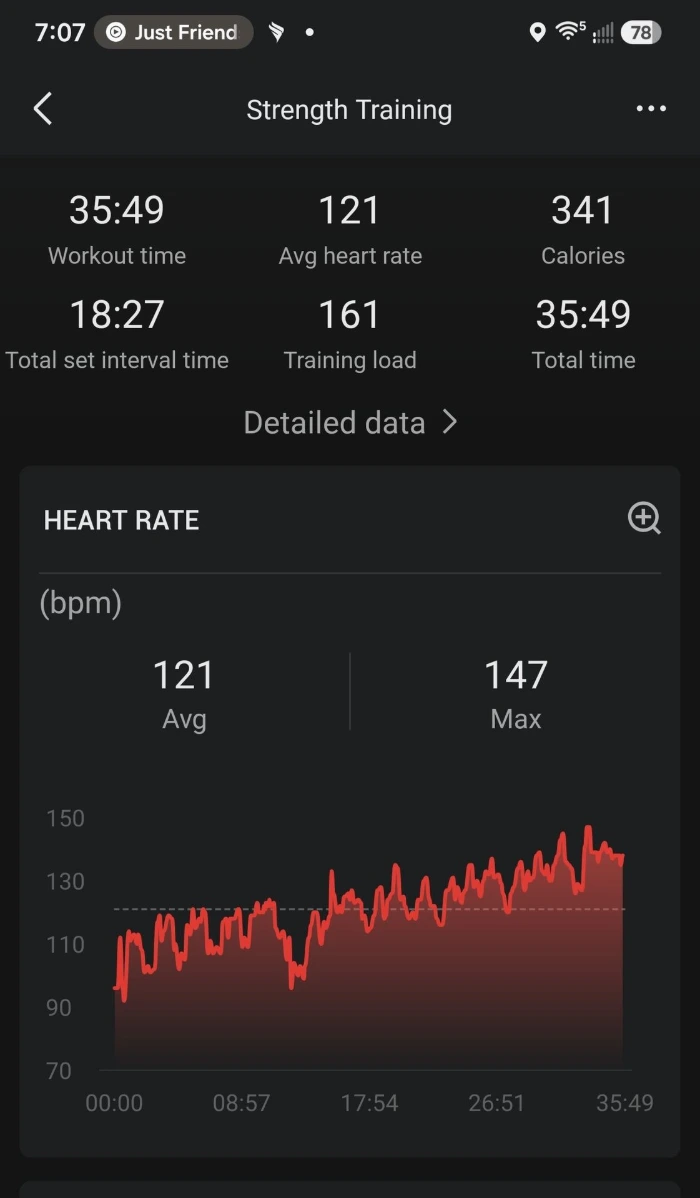
You don't have to take my word for it. To prove how incredibly efficient this is, let’s look at the hard data from a typical 36-minute kettlebell session tracked by a 71-year-old coach (myself).
Despite the short duration and zero joint-pounding impact, look at how the heart rate perfectly distributed across the metabolic spectrum:
Metric | Training Session Data |
Total Duration | 36 minutes (including warmup) |
Energy Expended | 341 calories |
Average Heart Rate | 121 BPM (firmly within the anaerobic conditioning threshold) |
Peak Heart Rate | 147 BPM (flirting with the theoretical maximum of 150 BPM for a 71-year-old) |
Time Spent Per Heart Rate Zone
Intensive (Warm-up/Cool-down): 8% of the time
Aerobic (Zone 2 Foundation): 36% of the time
Anaerobic (Strength & Power End): 42% of the time
VO₂ Max (Peak Cardiovascular Output): 12% of the time
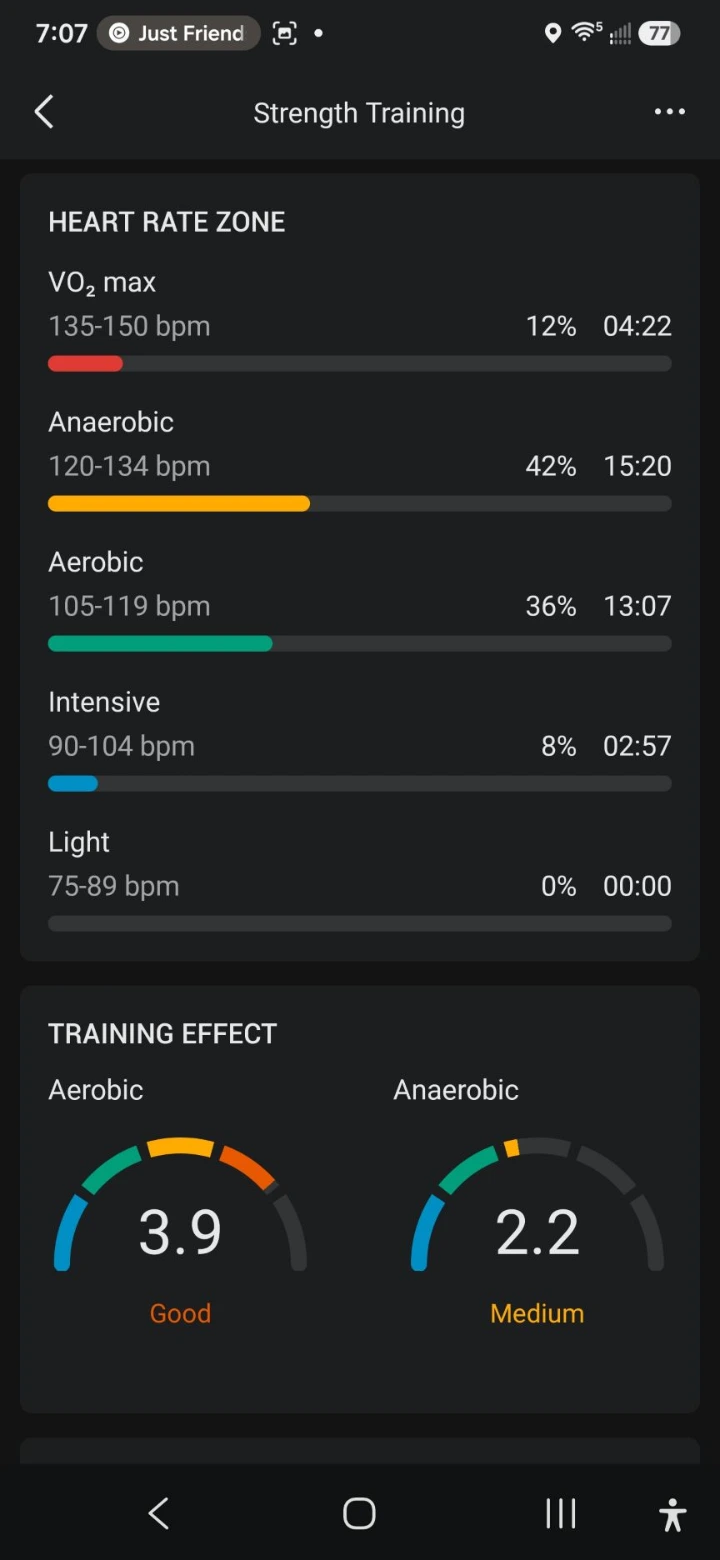
This is definitive proof. In just over half an hour, a single piece of iron delivered full-body strength, muscular endurance, dynamic mobility, and hit every single necessary cardio zone. It maximizes your physiological return while fiercely preserving your time and joint integrity.
What Next?
By shifting to a targeted kettlebell framework, you completely change your relationship with exercise. You no longer have to view cycling or walking as a chore you must do for fitness. Instead, you can go out for a bike ride or a long walk purely for the joy and fun of it, knowing your true cardiovascular armor was forged safely on the training mat.
However, because pushing into higher heart rate zones requires absolute precision—especially when balancing blood pressure, joint health, and individual recovery rates—you cannot afford a reckless, generic routine. Senior cardio programming must be continuously tailored and dynamically adjusted to match your unique state and energy on any given day.
Ready to train your heart smarter, not harder?
Let’s stop wasting hours on the treadmill. Connect with me today for a comprehensive lifestyle and conditioning assessment, and let’s design a high-efficiency cardiovascular plan built entirely for your longevity.
Book Your Longevity & Conditioning Assessment
Research Notes:
For HIIT and Cellular Aging: Robinson, M. M., et al. (2017). Enhanced protein translation underlies freshman mitochondrial responses to exercise in older humans. Cell Metabolism.
For VO2 Max and Longevity: Mandsager, J., et al. (2018). Association of cardiorespiratory fitness with long-term mortality among adults undergoing exercise treadmill testing. JAMA Network Open.